
Asphalt Repair and Patching in Lansing, MI
Lansing Best Asphalt Paving handles asphalt repair on driveways and small lots, from a single pothole to a whole stretch of alligator cracking. Each failed spot is cut square and dug to a firm bottom, down to the stone where the base has gone soft, then filled with hot mix and sealed at the seam. Holt and Okemos are a short drive from Lansing, and so are East Lansing, Dimondale, DeWitt, Grand Ledge and Mason.
Request a quote
Your name, your number and the street the pavement is on. A callback follows.
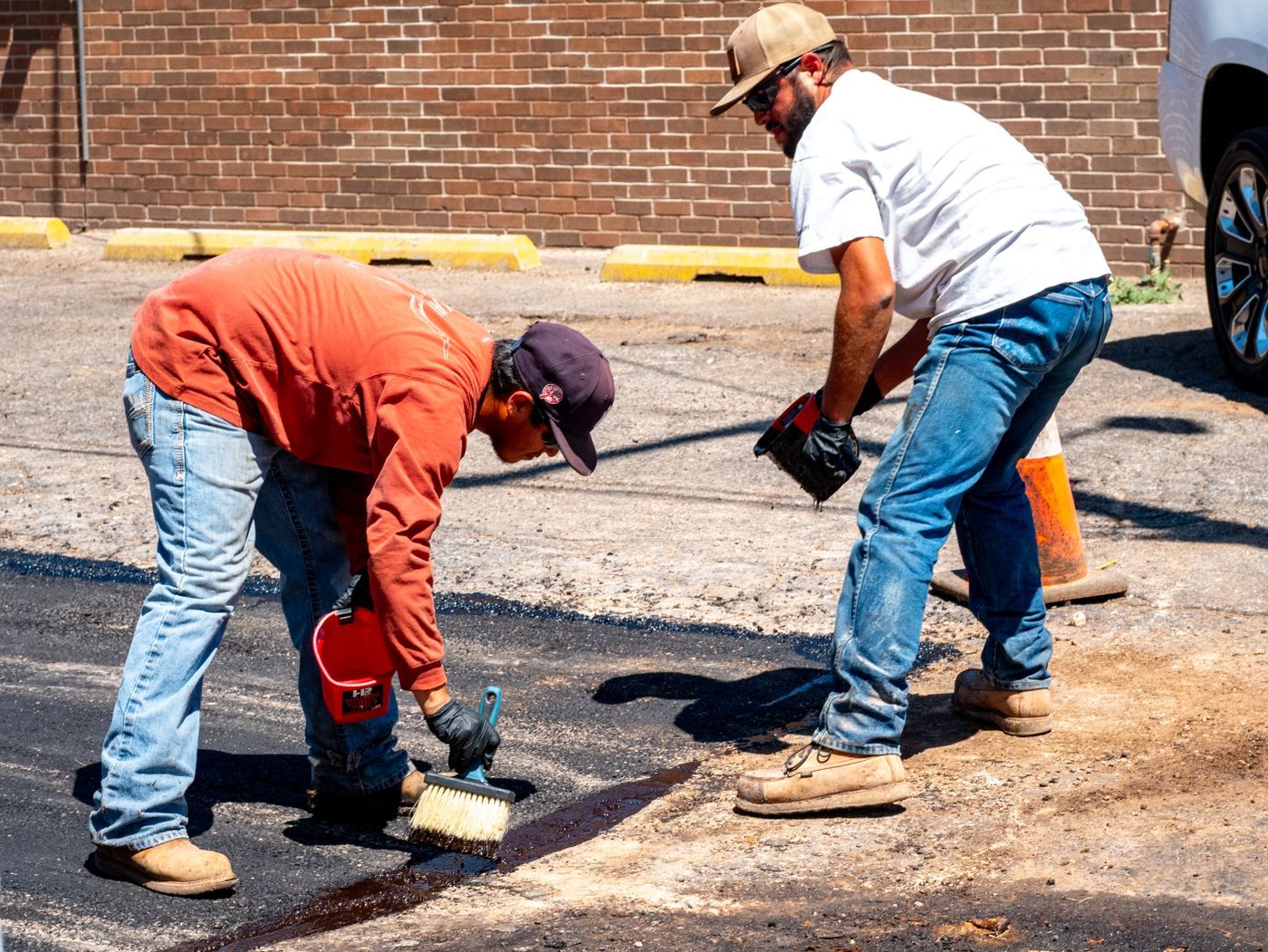
Cutting the edges square and digging all the way down to a firm bottom is always best to ensure that a driveway patch lasts for many years to come. If a seam is left unsealed, water can wash out the stone below and create uneven ground underneath. That results in a crack.
- Patch edges saw-cut square and sealed after
- Failed base dug out to firm stone
- Every spot on the drive patched in one trip
- Patches finished flush against concrete
- Cold patch used only as a winter stopgap
Price a patch
Typical prices per sq ft for Lansing jobs. Your quote follows a look at the job.
$80 to $160
Call (517) 878-2459 for your priceAt a glance
| Item | Typical figure |
|---|---|
| Typical driveway repair | $250 to $800; about $500 on average |
| A single pothole | $100 to $400 |
| Hot patch | $2 to $5 per sq ft; lasts 1 to 2 years |
| Saw-cut, full-depth patch | $4 to $12 per sq ft |
| Trip charge | $100 to $250 a visit |
| Winter care | Rock salt harms asphalt; sand or CMA instead |
Asphalt Repair and Patching Services
Driveway Pothole Repair
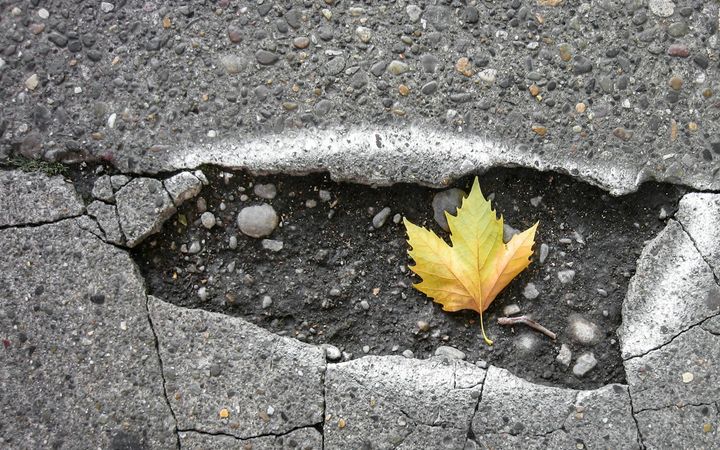
A pothole is an old crack that water got through. Once the stone below washes out or heaves in a freeze, the asphalt over it has nothing to sit on and breaks in. The sides are cut back to solid asphalt and the hole is dug until the bottom is firm before hot mix goes in. It usually runs $100 to $400 a hole, plus $100 to $250 to get the crew and machinery to the house.
Alligator Crack Repair
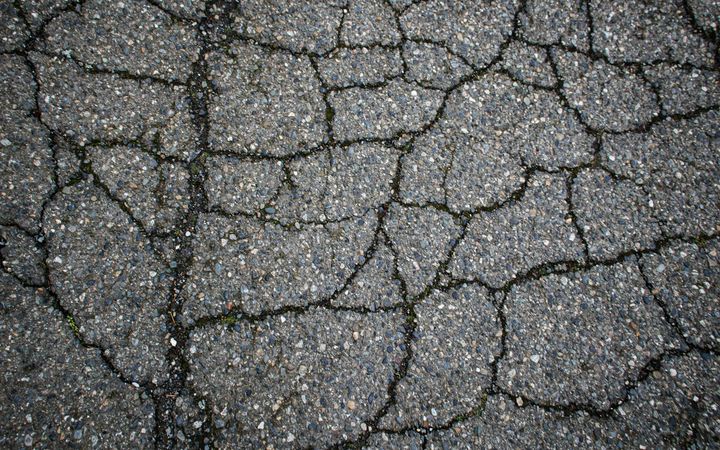
Cracks that link into a web of small blocks mean the base under that spot has failed. Crack filler won't fix it, and a skim patch over the top cracks again along the same lines. This one gets a saw-cut patch. Everything down to the stone comes out, and new gravel is compacted in its place before hot mix fills it back to grade. It is the full-depth method, usually $4 to $12 a square foot.
Crumbling Edge Repair
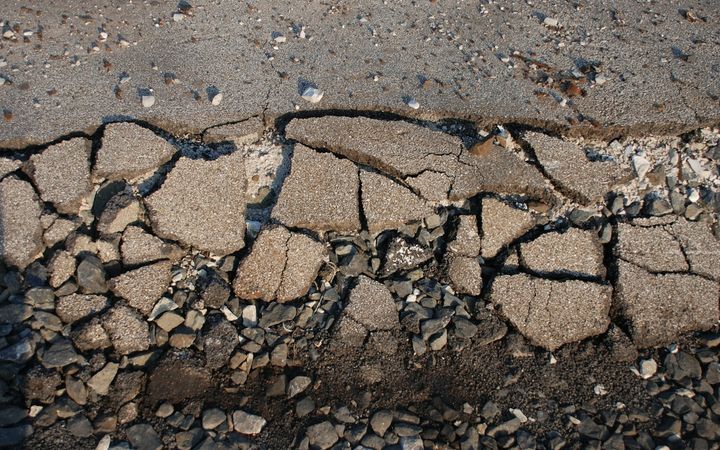
Asphalt at the side of a drive breaks off when nothing holds it from the side. Tires roll over the edge while the soil beside it settles, and the last foot or so cracks away in pieces. The broken strip is cut back to sound pavement and the stone under it is built up and packed before new hot mix goes down. Then topsoil is packed level against the new edge so it has support.
Low Spot and Sunken Patch Repair
A puddle that's still there hours after the rain marks a place where the base has settled. A thin layer of new asphalt over it leaves the dip's cause in place and peels at the feathered edge. Once the sunken area is cut out and the stone under it is brought back up to height, hot mix goes in at full depth so water runs off the way it did when the drive was new.
Other Patching Jobs
Infrared Asphalt Patching
An infrared heater softens the old asphalt in place, up to about 3 inches deep. Fresh mix is raked into it and rolled, so the patch fuses with the pavement around it and leaves no cut joint for water. It usually runs $2 to $6 a square foot, and it works year round. It suits surface damage. Where the base has failed, the saw cut is still the repair.
Patches Against Concrete
Where a patch meets a garage slab or a concrete apron, it's finished flush. A small lip there trips people and holds water against the joint.
Parking Lot Patching
On a lot, each failed spot is dug to the stone, the stone recompacted, and hot base mix laid in before any seal coat or overlay goes over them. Covered first, they come back as potholes in the same places.
Patches at the Street
A patch that reaches into the street is the city's to make, under the apron permit.
How a Driveway Patch Is Done
In Lansing, there are approximately 142.5 nights per year when it is below freezing. Water in any cracks in the pavement can freeze and make the pavement swell, and then it either cracks more or buckles. A driveway patch should be square cut, taking out the old pavement, and putting down a new base of stone is the proper way. We would also recommend hot mix, no matter what time of year it is, with either warm weather or the existing pavement heated enough to blend the two together, to make sure it won’t crack in the future.
Walk the whole drive first
Before any price, someone looks at every failed spot, the edges and where water stands after rain. A retaining wall or a garage slab next to a patch gets marked too, so the saw and the roller stay clear of it.
Cut it square
A saw cuts straight sides around the damage, back into asphalt that’s still sound. A ragged edge lets the new mix thin out to nothing at the border, and thin asphalt is the first to break.
Dig to a firm bottom
A surface patch takes out about 2 inches. Where the cracking says the base went, the old asphalt comes out down to the stone, and the stone is topped up and compacted until it doesn’t give underfoot.
Fill with hot mix and compact it
The mix goes in a little proud of the surface and is rolled or plate-compacted down level with the drive. Cold mix from a bag is kept for winter emergencies.
Seal the seam
The joint around the patch is sealed. Without it, water runs down the edge, washes out the stone, and the patch fails within months.
Sweep up
Saw dust and loose stone get swept off the drive and the street, not blown into the road where cars pass.
Patch It or Do More?
Patch it when the damage is a handful of spots on a drive that’s otherwise firm and drains. The usual line is about 25 to 30% of the surface needing repair. Below that, patches are the cheapest way to keep the drive going. Past it, the money is better spent on a new layer or a new drive. One exception. If the house goes on the market in a year or two, we’d patch the worst spots and leave the bigger job to the next owner.
If you have potholes in your driveway in October, and they are noticeable and you are driving into them quite frequently, spend the money to patch them now and make sure they are done properly. Waiting to do them later can create bigger potholes in the near future.
When patching is enough
A couple of potholes near the street, or one sunken spot where a downspout dumps water. Each is a local failure with a local cause. Fix the cause, and the rest of the drive keeps going. If the asphalt between the bad spots doesn’t flex underfoot, patching is the right call.
If it’s super minor, somewhere nobody sees, and you don’t care about long-term damage, then maybe consider doing it yourself and saving some money.
When patching stops paying
Cracks over most of the drive, or new holes every spring in new places. At that point you’re paying the crew’s trip charge every year on a drive that’s losing anyway. Stop. The driveway resurfacing and overlay page goes through when a new layer works and when the drive has to come out.
Lansing gets about 90 days of winter that freeze at night, which causes the water in the cracks to expand and freeze and widen them over time. That generally requires consistent repair work.
What Asphalt Repair Costs in Lansing
A typical driveway repair costs $250 to $800, and the national average is about $500. One pothole runs $100 to $400. Larger patches are priced by the square foot, from $2 for cold patch to $12 for a full-depth saw cut, and Lansing quotes tend to sit in the upper half of each range.
| Repair | Typical range |
|---|---|
| Driveway repair, typical job | $250 to $800 |
| One pothole | $100 to $400 |
| Cold patch, per sq ft | $2 to $4 |
| Hot patch, per sq ft | $2 to $5 |
| Infrared patch, per sq ft | $2 to $6 |
| Saw-cut full-depth patch, per sq ft | $4 to $12 |
| Crack filling, per linear ft | $0.50 to $3.00 |
| Service fee | $100 to $250 |
These are national ranges, read in 2026. No published patching figure exists for zip 48912, but Lansing figures for new driveways and sealing run at or above the top of the national ranges, so read the upper half of each row as the local one. The firm number comes after the drive has been walked.
What moves the price
- Depth. A surface patch replaces about 2 inches of asphalt. A failed base means digging to the stone and adding new gravel, which is why a saw-cut patch can cost twice as much a foot.
- How many spots. The service fee covers the truck and crew whether they fix one hole or six. Doing every spot on one visit spreads it.
- Clay underneath. Clay soils often need more digging and more base stone.
- The season. From April to late November there’s hot mix. Outside that window the choice is cold patch now and hot mix later, which pays for the work twice, or infrared.
- Cracks around the patch. Sealing them on the same visit adds $0.50 to $3.00 a foot, and it’s what stops the next pothole from starting a few feet away.
Asphalt Repair and Patching in nearby areas
Asphalt Repair and Patching FAQs
Can I patch my asphalt driveway myself?
If you are dealing with a small hole in your asphalt driveway, no bigger than a shovel blade in width and length, then patching it yourself could be a good idea. Bagged cold patch works as a stopgap. If you tamp it hard, say with a car tire driving over it back and forth several times, that should be enough to patch the hole. It is much better than leaving it alone.
How long does an asphalt patch last?
How long an asphalt patch lasts depends on how the patch was done. A surface patch, the top two inches of the asphalt, can last one to two years if done right. A more long-term way is to make a saw cut around the outside of the hole, put new stone underneath and then patch the cut hole. That can last several years.
Can asphalt be repaired in winter in Michigan?
Asphalt can be patched or repaired in the winter in Michigan, even though the hot mix plants close in late November. A cold patch will be temporary, whereas an infrared heater reheats the old asphalt. The other choice is waiting for April, when the plants reopen.
What causes alligator cracking in a driveway?
When we see what's called alligator cracking in a driveway, in most cases the base underneath the asphalt cannot carry the weight of the asphalt and the vehicles going over it. It can also be water finding cracks in the pavement and going down into the stone, which makes it unstable. An asphalt driveway should be a minimum of 2 to 3 inches thick to be a good paving job.
Does road salt damage an asphalt driveway?
Yes, rock salt can damage asphalt over the wintertime. A better option is calcium magnesium acetate, or plain sand, which will not hurt the asphalt. Also, when snow piles up on the edges, it can create pools of water that find their way down to the base. That makes the base unstable, and it cracks.
Will the patch match the rest of my driveway?
When patching an older driveway, the new hot mix will be a solid dark black, whereas the old asphalt it's going onto may have turned gray. Just one seal coat over the new and the old asphalt can easily even out the color, so the patch can't be seen. Wait about a year to seal.
Do I need a permit to patch my driveway in Lansing?
In Lansing, no city permit is required to patch your driveway on your own lot. The city's part starts at the curb strip and walkway, which is considered the city right-of-way. For any cuts made in the street itself, the city is responsible for patching the pavement.
What should an asphalt repair quote list?
We recommend that any quote you get from an asphalt contractor lists each and every patch that is going to be done, the square feet of each patch, how deep they're going to go, and how thick the pavement will be. Also get in writing whether the base below the pavement will be replaced or not.
Get a quote on your asphalt repair and patching
Tell us roughly how big the driveway or lot is and what you see on it: cracks, low spots, crumbling edges, potholes. We call back with the fix that fits and a ballpark for it.
Request a quote
A call to (517) 878-2459 gets you a ballpark soonest. Or send the form and we phone you back.