
Driveway Resurfacing and Overlay
A new layer of asphalt over a Lansing driveway whose base still holds, milled flush at the garage and apron, or a straight answer that the drive needs replacing.
Lansing Best Asphalt Paving offers asphalt paving in Perry, MI, which means driveway paving, seal coating and asphalt repair for Perry homes.
Request a quote
Your name, your number and the street the pavement is on. A callback follows.
About two-thirds of the ground around Perry's center is Boyer loamy sand, which drains fast and holds little water to freeze. That makes it good ground for a driveway, as long as the sand is compacted before the stone goes on. Loose sand settles under the first heavy loads, and an edge left on it with no support crumbles off.
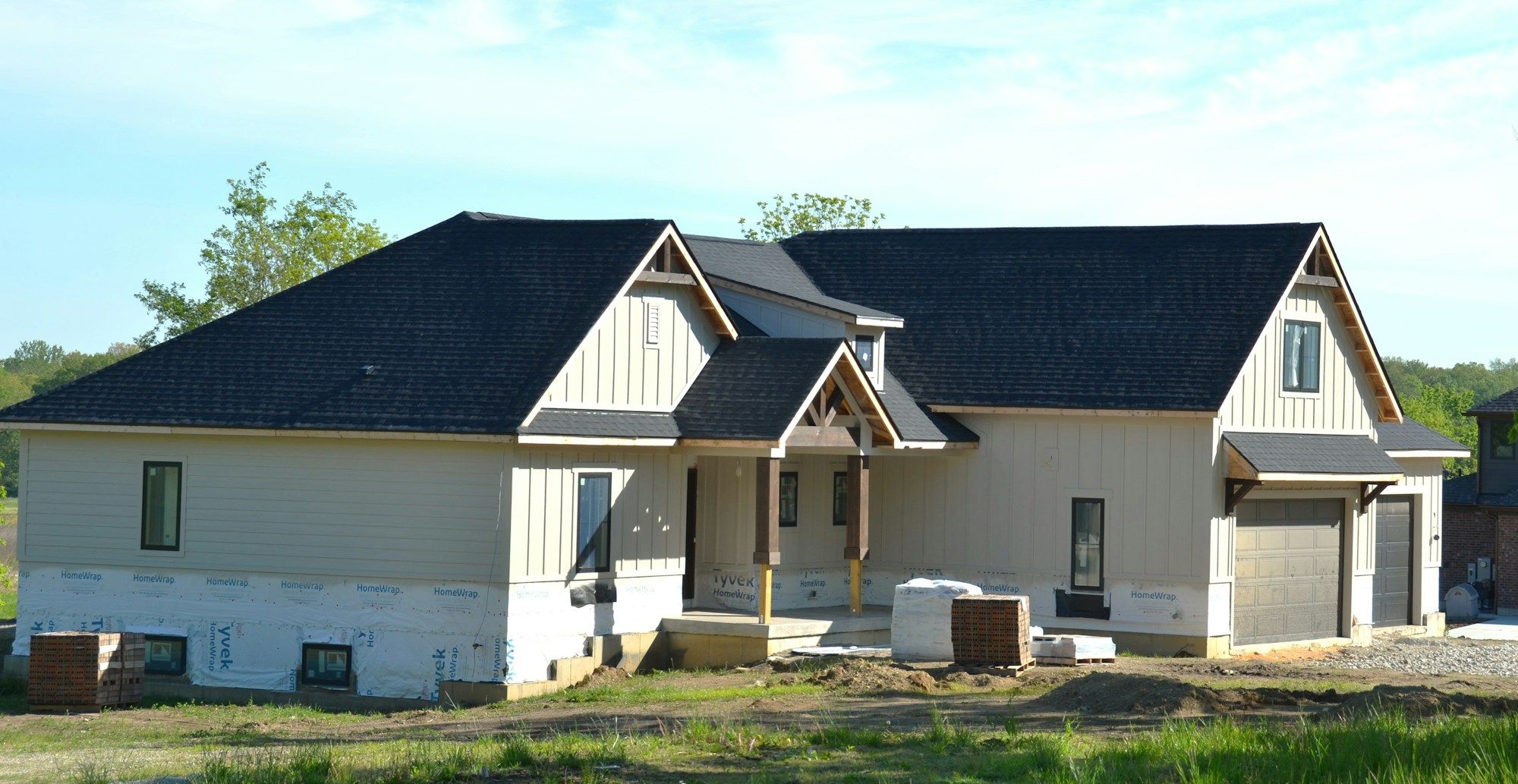
More than one in five Perry homes is in a building of five or more units, so much of the asphalt in town is shared parking. Most of the rest is single-family drives, and about half of all homes in the city went up between 1970 and 2009.
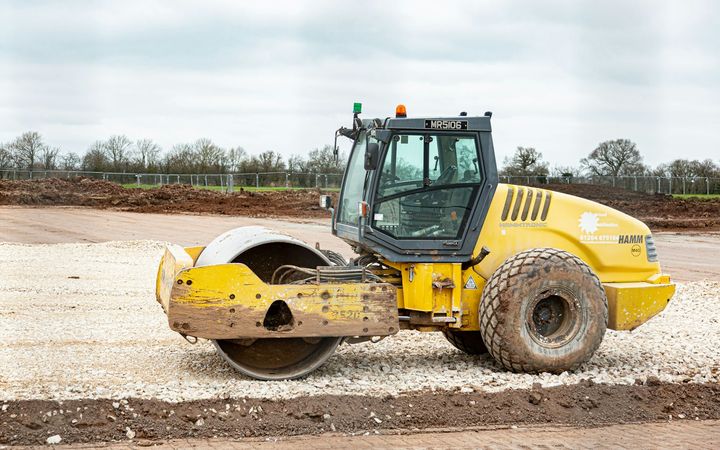
Boyer's lower layers are up to 91% sand. We wet the sand and go over it with a plate compactor or a roller before the crushed stone goes down, then compact the stone in two lifts. Skip that on sand and you'll see ruts within a year where the tires sit.
Lines fade fastest where cars turn in and out. We restripe after a seal coat, on the old layout unless the owner wants a new one. The accessible stalls, their aisles and the signs go in to the current rules.
A drive is strongest in the middle and weakest at the edge. On sand, that edge has nothing to lean on. Rain carries off the sand beside it, and the edge cracks and breaks away in chunks. So after paving we pack soil against the side, up to the top of the asphalt, and seed it. The roots hold the shoulder.
Not all of Perry is dry sand. Gilford sandy loam covers about 6% of the ground around the center, and it’s rated poorly drained, with water at the surface in wet months. Where a drive dips onto Gilford ground, it needs a deeper base and sometimes a drain. The sandy part needs neither.
Building or altering a driveway approach in Perry takes two permits under Section 3.34 of the zoning ordinance: a zoning permit, and a driveway approach permit from the Superintendent of Public Works. From the curb to the sidewalk, the approach has to be concrete or asphalt. Asphalt goes to MDOT’s 13A mix, concrete is at least 6 inches thick for a home, and the grade can’t be steeper than 14%. Parking lots need a durable, dust-free surface graded to drain, plus wheel stops. On a Shiawassee County road the road commission’s permit is $35.
From Lansing, Perry is a 33-minute drive out along I-69, 22 miles by road.
We also serve Potterville, MI, south of Lansing on Lansing Road, by the I-69 exit.
Perry has a population of about 2,129. Here is what that means for the work we do here.
| Local fact | Detail |
|---|---|
| Homes built 1970 to 2009 | 53% of the city's 947 homes; the median one dates from 1973. |
| Homes in buildings of 5+ units | 21.8%; 61% of homes are owner-occupied. |
| Main soil near the center | Boyer loamy sand, about two-thirds of the square mile around the center, well drained. |
| Wet spots | Gilford sandy loam, about 6% around the center, poorly drained. |
| Driveway permit | A zoning permit plus a public works approach permit; the approach is asphalt or concrete. |
| County | Shiawassee County; Perry Township surrounds the city. |
A new layer of asphalt over a Lansing driveway whose base still holds, milled flush at the garage and apron, or a straight answer that the drive needs replacing.
Restriping and new layouts for Lansing parking lots, with accessible stalls counted against the ADA table and the lot kept half open while the paint dries.
Patching, crack sealing, milled overlays and new asphalt lots in Lansing, priced after the drains and the base have been checked.
Potholes, alligator cracking, broken edges and low spots on Lansing driveways and lots, cut out and patched in hot mix down to a firm base.
Cracks in Lansing driveways and lots blown clean and sealed with hot rubberized sealant, or filled where they barely move, before winter water gets under them.
Wait through one winter. Backfill beside a new foundation keeps sinking for months, and a drive paved over it dips where it meets the garage.
Yes, if the lot is done in halves. Each half is closed for about a day. The owner posts notices a few days ahead so cars get moved the night before.
Every two to three years on a busy lot. And every time it's seal coated, because the sealer covers the old lines.
They do. Millings rolled tight bind together over time and stop sand from working up. On a long country drive they cost much less than hot mix.
Only with cold patch, a stopgap that tends to pop out by spring. The hot mix plants close in late November, so a lasting repair waits until they open again in April.
Yes. We saw the old edge straight, build the new base to the same depth and pave it flush, with the joint sealed. It will look darker than the old drive until both are sealed.
Tell us roughly how big the driveway or lot is and what you see on it: cracks, low spots, crumbling edges, potholes. We call back with the fix that fits and a ballpark for it.
A call to (517) 878-2459 gets you a ballpark soonest. Or send the form and we phone you back.