
Driveway Resurfacing and Overlay
A new layer of asphalt over a Lansing driveway whose base still holds, milled flush at the garage and apron, or a straight answer that the drive needs replacing.
Lansing Best Asphalt Paving offers asphalt paving in Dimondale, MI, which means driveway paving, seal coating and asphalt repair for Dimondale homes.
Request a quote
Your name, your number and the street the pavement is on. A callback follows.
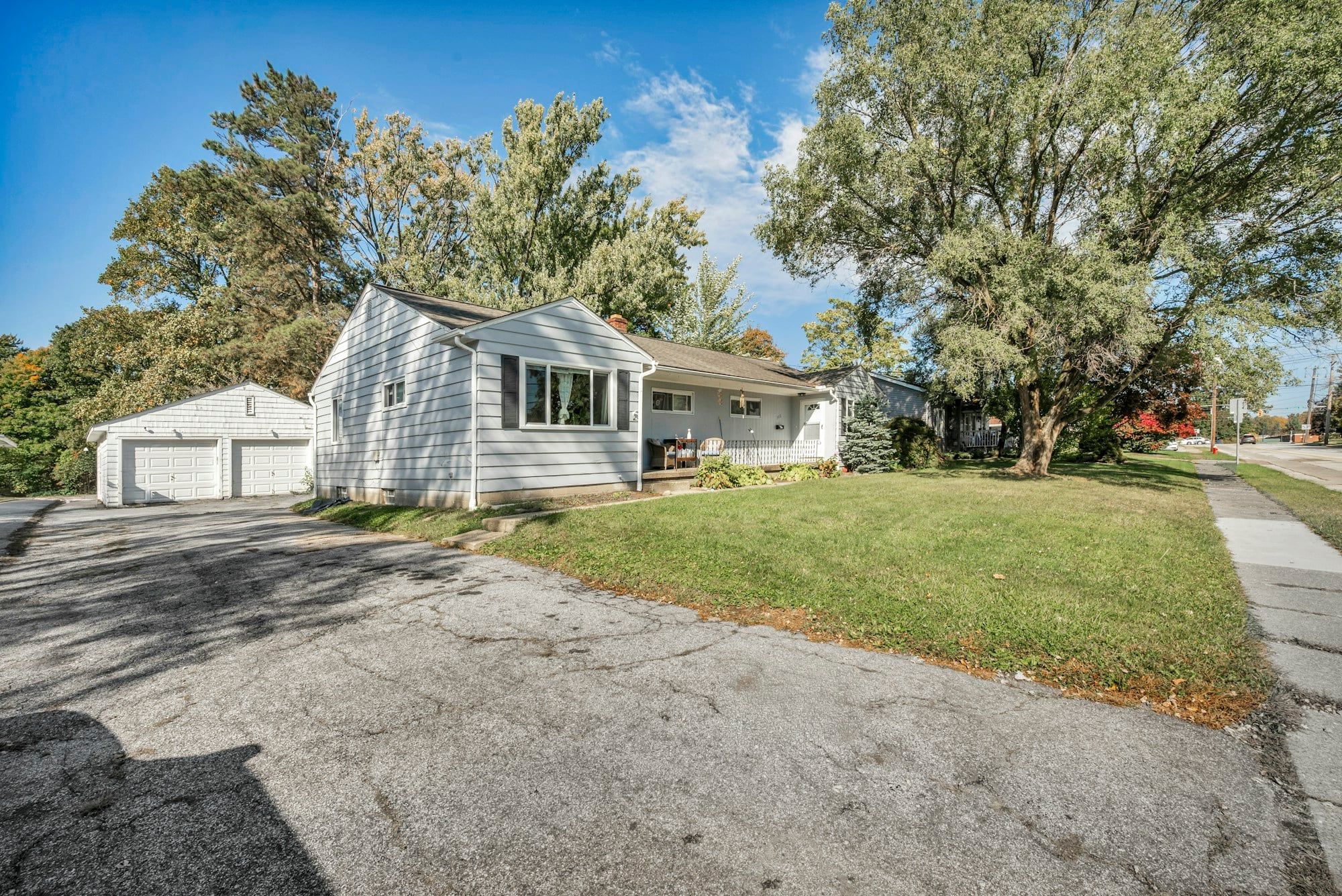
Nearly nine in ten Dimondale homes are single-family houses, and about as many are owned by the people living in them. Most went up between the 1950s and the 1990s. A drive that old may have been patched or topped at least once. Before we quote a new layer, we check whether the base under it still holds, because an overlay on a broken base cracks along the old lines within a few winters.
Around the village center the ground changes within a few hundred feet. Owosso and Boyer sandy loams drain well on the rises, while Conover loam in the flatter spots stays wet about a foot down for part of the year, and one driveway can cross both.
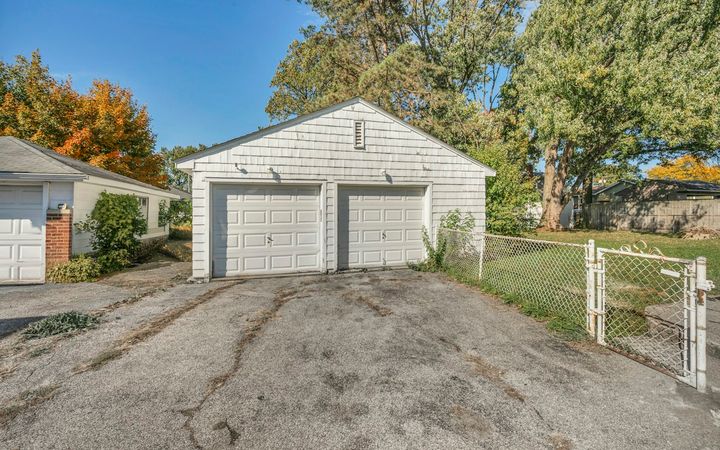
Two in five homes in the village went up in the 1960s, 1970s or 1980s. If a drive from then has cracks running edge to edge and soft spots where the car sits, it comes out. We regrade, add to the stone base and pave it new. Few cracks and a level surface? Then a new top layer does the job for less.
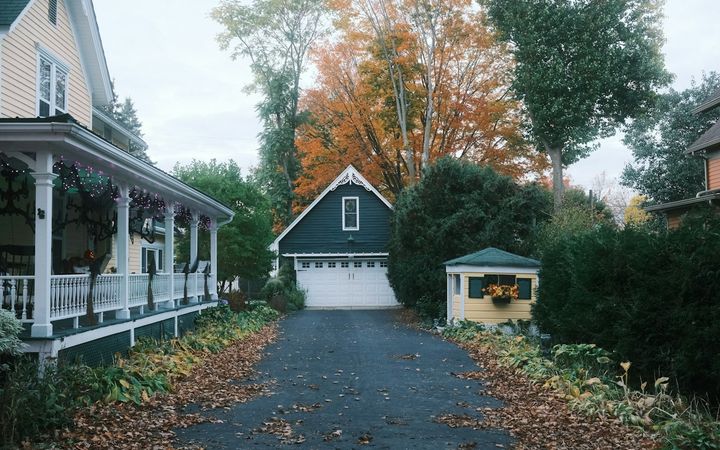
A seal coat every two to three years keeps the sun and the rain from drying out the surface as fast. New asphalt waits about a year for its first coat so its oils can cure. Cracks get filled first, and the sealer stays off the garage floor and the walk.
Conover loam is rated somewhat poorly drained. In wet months the water sits about 12 inches down, held up by dense till starting around 44 inches below the surface. So asphalt on this ground fails from underneath. The base stays wet, it freezes, and in spring it lifts the surface.
Where a drive crosses a Conover spot, the soft soil gets dug out. We lay fabric to keep it out of the stone and build a deeper stone base there than the sandy part of the same drive needs. On the Boyer sand, the stone goes right onto firm ground.
Dimondale was platted in 1856 around Isaac Dimond’s mill on the Grand River, and about 22% of its homes went up before 1940. A house that old often has a one-car drive back to a garage behind it. Going to two cars starts with the side setback. Old drives also get their edges lifted by tree roots, so we cut only the roots under the new paving and leave the others alone.
Dimondale’s code, Chapter 1024, says any driveway built over the village right-of-way needs a permit from the village clerk, and so does any curb cut. The clerk gets a performance bond before the permit is issued. Curb cuts follow the village’s own specifications, and the street commissioner has to be satisfied with how the right-of-way is left. The chapter is silent on resurfacing a drive that stays inside your lot, so we check with the clerk before starting. A drive that meets a county road instead gets its permit from the Eaton County Road Commission in Charlotte.
Dimondale is about 16 minutes from Lansing, southwest on M-99, 8.6 miles by road.
We also serve Webberville, MI, east of Lansing off I-96, on wet, frost-prone ground.
Dimondale has a population of about 1,179. Here is what that means for the work we do here.
| Local fact | Detail |
|---|---|
| Homes from the 1960s to 1980s | 40% of the 579 homes in the village; the median one dates from 1967. |
| Owner-occupied homes | 87.5%; 87% of homes are single-family detached houses. |
| Main soils near the center | Owosso-Marlette and Boyer sandy loams on the rises, Conover loam in the flatter spots. |
| Water in Conover loam | About 12 inches down in wet months; the soil is rated somewhat poorly drained. |
| Driveway permit | From the village clerk for a drive over the right-of-way or a curb cut; a bond comes first. |
| County | Eaton County; the village lies inside Windsor Charter Township. |
A new layer of asphalt over a Lansing driveway whose base still holds, milled flush at the garage and apron, or a straight answer that the drive needs replacing.
Potholes, alligator cracking, broken edges and low spots on Lansing driveways and lots, cut out and patched in hot mix down to a firm base.
Cracks in Lansing driveways and lots blown clean and sealed with hot rubberized sealant, or filled where they barely move, before winter water gets under them.
Broken, sunken or heaved aprons at the street end of Lansing driveways, cut out and rebuilt in hot mix under the City's right-of-way permit.
Tar and chip and recycled asphalt millings driveways around Lansing, the two surfaces that cost far less than hot mix on a long rural drive.
Most two-car drives are 18 to 20 feet wide, and a one-car drive 10 to 12. Park a truck, or open doors on both sides? Add a foot or two. A drive can also flare out near the garage and narrow toward the street.
Yes, for a while. Fresh asphalt is jet black, and a few years of sun fade it toward gray. Seal coat both drives and they're the same color again.
It goes back to an asphalt plant, where it is crushed and mixed into new hot mix. Clean old asphalt is worth something to a plant, so very little of it goes to a landfill.
We would rather not. Asphalt laid over concrete cracks along the concrete's joints within a year or two. A sound concrete apron can stay as it is, with the new asphalt butted up to it.
Yes. MISS DIG marks the lines the utilities own, not the ones a past owner put in. Flag sprinkler lines, lights and any wire to a shed, and we keep the saw and the machines clear of them.
Close to it. An edge that stands an inch or more above the soil breaks when a tire drops off it, so after paving the soil gets packed up to the top of the asphalt and seeded.
Tell us roughly how big the driveway or lot is and what you see on it: cracks, low spots, crumbling edges, potholes. We call back with the fix that fits and a ballpark for it.
A call to (517) 878-2459 gets you a ballpark soonest. Or send the form and we phone you back.