
Driveway Resurfacing and Overlay
A new layer of asphalt over a Lansing driveway whose base still holds, milled flush at the garage and apron, or a straight answer that the drive needs replacing.
Lansing Best Asphalt Paving offers asphalt paving in Portland, MI, and that includes driveway paving, seal coating and asphalt repair for Portland homes.
Request a quote
Your name, your number and the street the pavement is on. A callback follows.
About a fifth of the ground around downtown Portland slopes 6% or more, and much of it is Fox sandy loam that has already lost topsoil to erosion. A drive on that kind of hillside turns into a channel in a heavy rain. Water picks up speed down the pavement, cuts under the edges and leaves a gully along one side by spring.
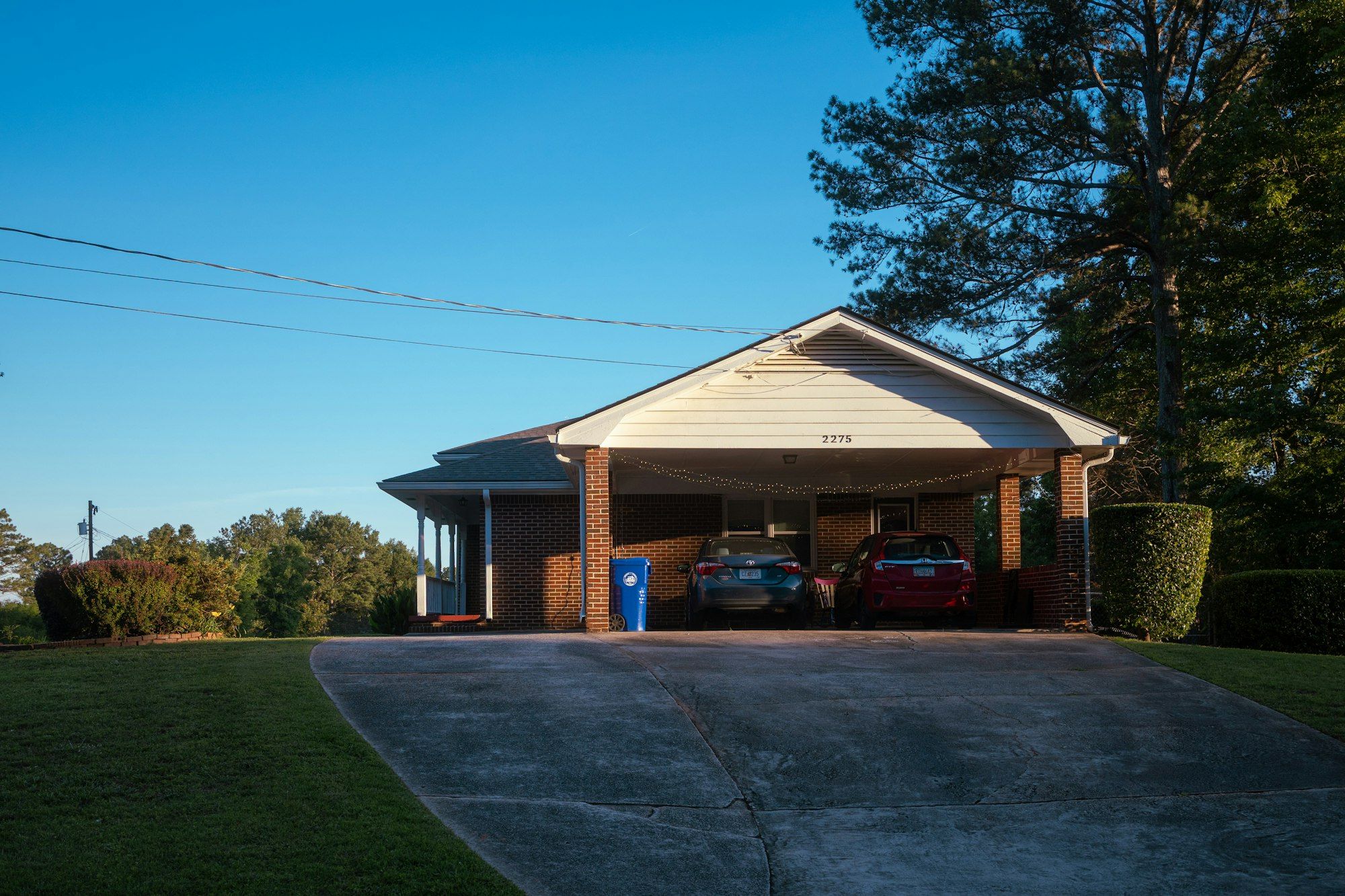
Three in four Portland homes are older than 1980, and almost four in ten date from before 1940. Many of their drives have been patched and topped more than once. Before we quote an overlay we check how many layers are already there, since a drive built up too high no longer meets the garage floor or the walk.
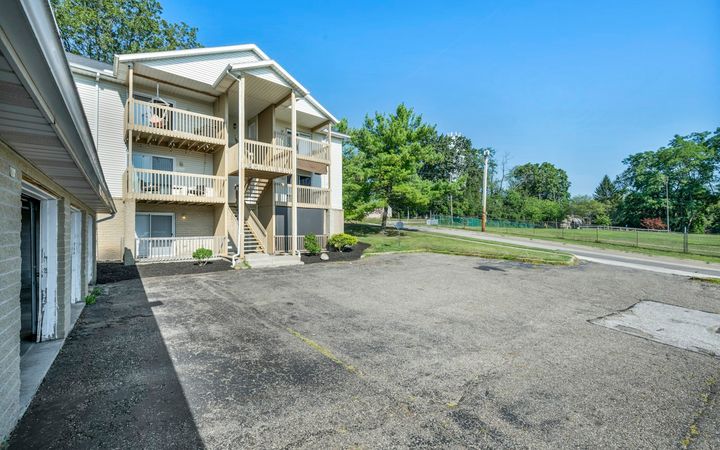
About one Portland home in six is in a building of five or more units, so small apartment lots are steady work here. Most need the cracks filled first, then a seal coat, then new lines. The accessible stalls and their signs go in to the current rules.
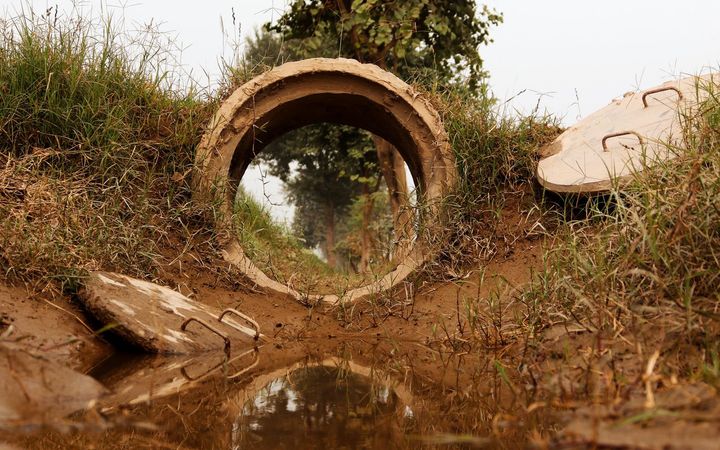
Outside the city limits, lots of drives cross a roadside ditch on a culvert pipe. Once that pipe rusts through or gets crushed, the asphalt over it sags. On a county road the Ionia County Road Department sets the pipe size. The drive gets repaved after the new pipe is in.
The low ground along the Grand and the Looking Glass is Abscota loamy sand, a floodplain soil. It drains fine, and frost hardly lifts it. The problem is that loose sand shifts. If nobody wets it and rolls it before the stone goes on, the drive ruts right where the tires run. Near the water we also build the base a bit higher than the yard. That way high water runs off it and doesn’t soak the stone.
Portland’s zoning ordinance says the parking a home needs has to be asphalt or concrete. A new parking lot needs a permit from the zoning administrator before any work, with two sets of plans (Sec. 9-4). A two-way drive into a lot is 24 feet wide at least. Adding or moving a drive on an apartment or business lot means a short site plan review at City Hall on Kent Street. One- and two-family homes skip it. Outside the city, drives on county roads go through the Ionia County Road Department in Ionia.
From Lansing we reach Portland in about half an hour: 24 miles out I-96 to the west.
We also serve Williamston, MI, east past Okemos, a river town on M-43.
Portland has a population of about 3,770. Here is what that means for the work we do here.
| Local fact | Detail |
|---|---|
| Homes built before 1940 | 38.3% of the city's 1,611 homes; three in four predate 1980. |
| Apartments | 16% of homes sit in apartment buildings with five units or more. |
| Hillside soils | Fox sandy loams, most of them eroded, cover about 34% of the square mile around the center. |
| Slopes of 6% or more | About 21% of that square mile, much of it eroded Fox and Boyer ground. |
| River flats | Abscota loamy sand, a floodplain soil, makes up about 9% of the land around downtown. |
| County | Ionia County; the city sits where the Looking Glass River joins the Grand. |
A new layer of asphalt over a Lansing driveway whose base still holds, milled flush at the garage and apron, or a straight answer that the drive needs replacing.
Potholes, alligator cracking, broken edges and low spots on Lansing driveways and lots, cut out and patched in hot mix down to a firm base.
Broken, sunken or heaved aprons at the street end of Lansing driveways, cut out and rebuilt in hot mix under the City's right-of-way permit.
Restriping and new layouts for Lansing parking lots, with accessible stalls counted against the ADA table and the lot kept half open while the paint dries.
Cracks in Lansing driveways and lots blown clean and sealed with hot rubberized sealant, or filled where they barely move, before winter water gets under them.
Ice makes any steep drive slick, asphalt or concrete. So the shape counts for more than the surface. On a steep drive we leave the top finish a little coarser, add a flatter landing at the street, and keep room along the side to push snow.
Yes, if the drive slopes down to the garage. A trench drain is a long, narrow grate set across the drive. It catches the water before it gets to the door. But it needs a pipe to carry that water somewhere lower, so it only works on a lot that has somewhere lower to send it.
Not directly. Brick and old concrete move on their own, and their joints come up as cracks in the new layer. We break them out. Or, if the strip is solid and level, we mill or grind its edges and lay a thicker layer over it.
Both owners sign off on one price and one plan, and the bill is split however they agree. We pave the shared part first and each owner's branch after, so neither house is shut in for long.
Mark the edges with stakes before the first snow, and ask the plow driver to keep the blade raised a little. Edges with packed soil beside them hold up far better than edges that stand above the lawn.
On the street or a neighbor's drive, for about three days. Move the cars out the night before we start, and keep anything you need from the garage out with them.
Tell us roughly how big the driveway or lot is and what you see on it: cracks, low spots, crumbling edges, potholes. We call back with the fix that fits and a ballpark for it.
A call to (517) 878-2459 gets you a ballpark soonest. Or send the form and we phone you back.